
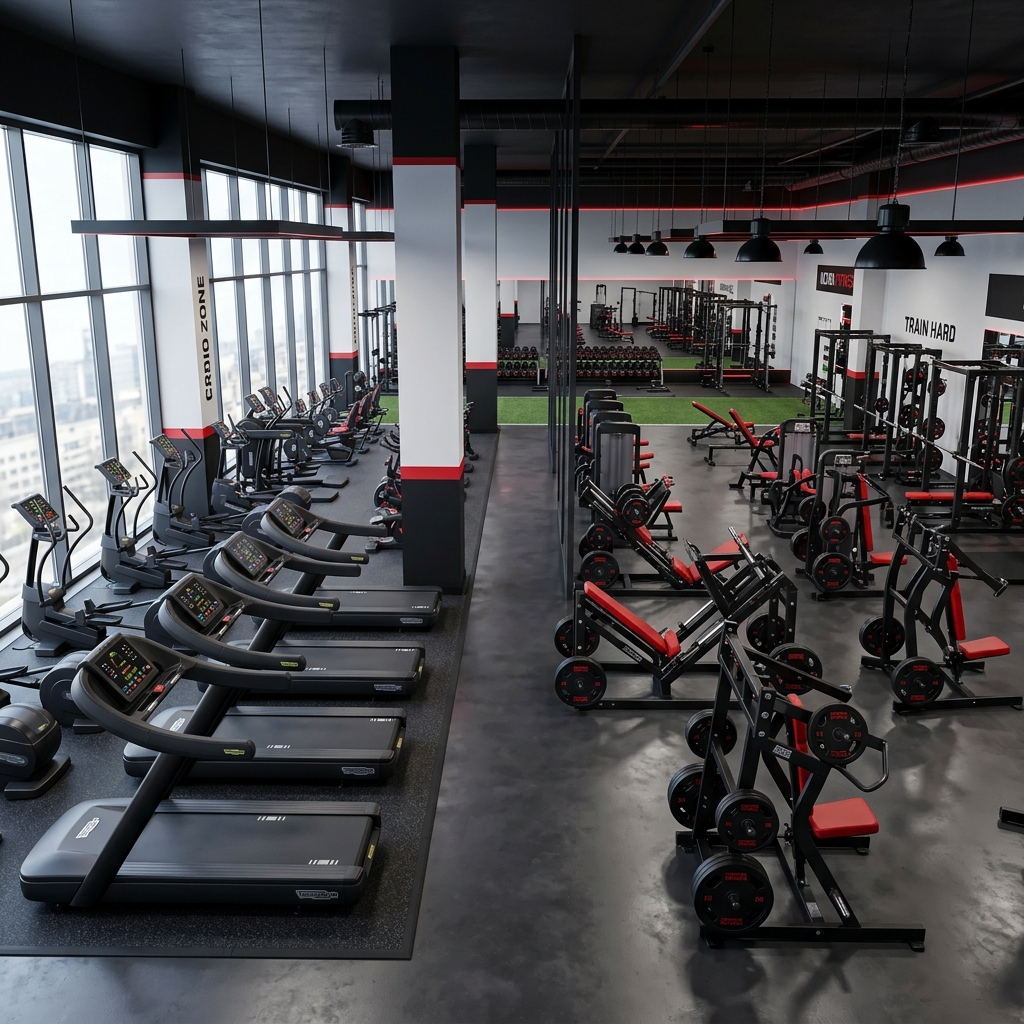
Introduction
Setting up a commercial gym is more than just buying equipment. It requires proper planning, layout design, and selecting the right fitness machines that ensure performance, durability, and user satisfaction.
1. Understanding Your Gym Type
Before selecting equipment, define your gym category:
- Commercial gym
- Corporate fitness center
- Residential gym
- Boutique fitness studio
Each type requires a different mix of equipment and layout.
2. Choosing the Right Equipment
Modern gyms require a mix of:
- Cardio Equipment: Treadmills, Cross trainers, Bikes
- Strength Equipment: Plate-loaded machines, Pin-loaded machines
- Functional Training: Rigs, Free weights, HIIT setups
👉 Brands like BH Fitness offer fully integrated cardio and strength solutions with smart connectivity and advanced consoles.
3. Importance of Smart Technology in Gyms
Modern equipment is not just mechanical — it’s digital.
For example:
- Connected machines track performance
- Data helps improve user engagement
- Smart systems increase retention
As seen in BH Fitness systems, integrated platforms allow real-time tracking and reporting for gym owners.
4. Layout Planning & Space Optimization
Proper layout ensures smooth movement, safety, and a better user experience.
Professional planning includes:
- Equipment spacing
- Traffic flow
- Zoning (cardio, strength, functional)
5. Installation & After-Sales Support
A gym setup is incomplete without professional installation, maintenance support, and spare parts availability. Reliable brands provide strong service networks and long-term support.
Conclusion
A successful gym is built with the right planning, quality equipment, and expert execution.
👉 At Fitness Recall, we deliver complete end-to-end gym solutions tailored to your needs.