
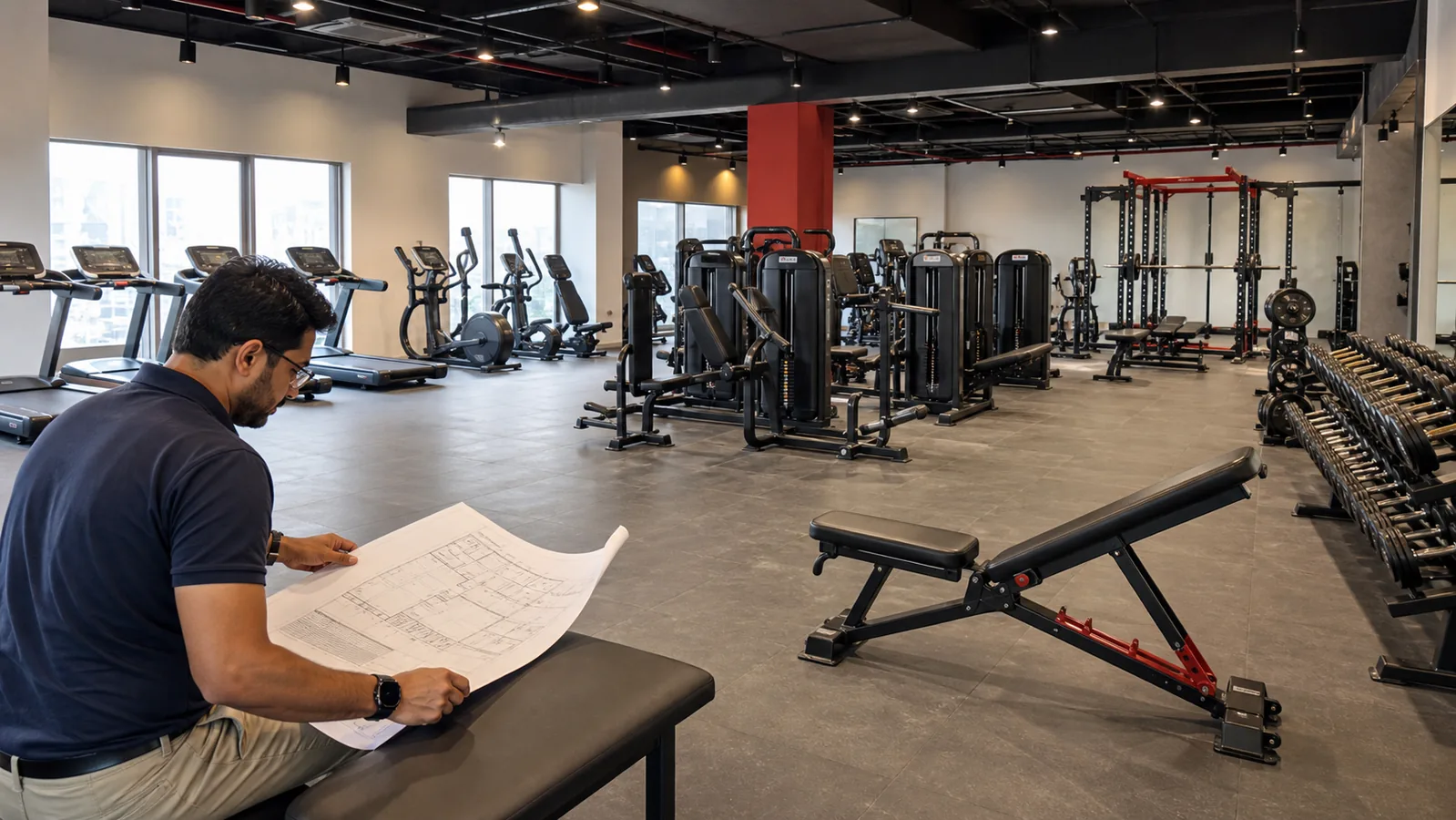
Opening a gym is exciting, but choosing equipment is where many projects become complicated. A catalogue can show hundreds of machines, yet it cannot tell you what will work inside your particular space, how members will move between stations or which products deserve the largest share of the budget.
For a commercial gym project in Pune, the sensible starting point is not a machine list. It is a clear plan covering the audience, available floor area, training style, expected daily usage and long-term service requirements.
Begin with the people who will use the gym
A gym serving experienced lifters needs a different equipment mix from a residential clubhouse or corporate fitness room. Before requesting quotations, define the main users and how they are likely to train.
A general commercial gym usually needs a balanced combination of:
- treadmills, cross trainers, bikes and other cardio options;
- selectorised strength machines that are easy for new members to understand;
- plate-loaded equipment for experienced users;
- benches, racks, dumbbells and weight plates;
- functional training accessories and an open movement area;
- stretching, mobility and recovery space.
This first step prevents the floor from becoming crowded with machines that look impressive but do not support the intended training experience.
Measure the usable floor, not only the carpet area
Columns, doors, electrical points, windows, mirrors and access routes all affect an equipment layout. Cardio machines need practical access to power and ventilation. Strength machines need working clearance around moving arms and weight stacks. Free-weight areas require enough room for lifting, spotting and safe circulation.
A proper layout should also consider delivery access. Large commercial machines may arrive in sections, but staircases, lifts and door widths still need to be checked before dispatch. Resolving these details early is far easier than dealing with them during installation.
Fitness Recall provides turnkey gym planning and equipment support for new facilities and upgrades. A coordinated plan helps connect the product list with the actual floor rather than treating them as separate decisions.
Put cardio equipment first, but do not let it consume the budget
Cardio equipment creates a strong first impression and is used heavily in many facilities. Treadmills often receive the greatest demand, followed by cross trainers, upright or recumbent bikes and specialised options such as stair climbers.
The right quantity depends on the membership model. A compact clubhouse may benefit from a small, varied cardio line. A busy commercial gym may require more treadmills and duplicate stations to reduce waiting during peak hours.
When comparing cardio machines, look beyond display size. Ask about motor and drive specifications, maximum user weight, running area, resistance system, frame stability, warranty coverage and service availability. Explore the commercial cardio and strength product range to compare suitable categories before finalising a mix.
Build a logical strength-training journey
Strength equipment should allow members to train the whole body without forcing them to cross the floor repeatedly. Grouping related stations makes the gym easier to understand and improves movement during busy periods.
For example, selectorised machines can be organised around lower body, pressing, pulling and core training. Plate-loaded machines can sit closer to the free-weight zone, where benches, racks, plates and dumbbells are already available.
Avoid choosing several machines that perform almost the same movement while leaving a major training need uncovered. A smaller, carefully balanced selection often delivers more value than a long list assembled without a plan.
Compare commercial build quality and support
Commercial equipment is expected to operate repeatedly throughout the day. Frame construction, bearings, cables, upholstery, adjustment points and finish quality all influence how the equipment feels and how well it ages.
The supplier relationship also matters after installation. Ask how delivery is coordinated, who assembles the machines, what testing is completed at handover and how service requests are managed. Documentation, user guidance and access to parts can be just as important as the initial product specification.
Fitness Recall works with international equipment ranges including BH Fitness, Tunturi Fitness and California Fitness. The appropriate range depends on the facility, usage, design direction and budget.
Plan the complete project cost
The machine quotation is only one part of a gym budget. A realistic plan may also include freight, unloading, installation, flooring, electrical preparation, mirrors, storage, branding and future maintenance.
Keep a small contingency for site conditions and final adjustments. It is also useful to divide the equipment into essential opening items and later additions. This protects the quality of the first phase while leaving room to expand once real member usage becomes clear.
Questions to ask before placing an order
Before approving a commercial gym equipment order in Pune, confirm the following:
- Does the equipment mix suit the intended members?
- Has every machine been checked against the final floor plan?
- Are power, ventilation and flooring requirements documented?
- Can the equipment reach the gym through the available access route?
- Are installation, testing, warranty and service responsibilities clear?
- Is the proposed budget complete, including logistics and site preparation?
Good equipment selection is not about filling every empty corner. It is about creating a floor that feels organised, performs reliably and remains useful as the facility grows.
To discuss commercial gym equipment or a complete gym setup in Pune, contact Fitness Recall with the location, approximate floor area and preferred training format.
Planning a Pune project? Review our commercial gym equipment supply and setup support in Pune for equipment categories, represented brands, delivery, installation and quotation details.