
Quick answer
What should you look for in a commercial gym equipment supplier?
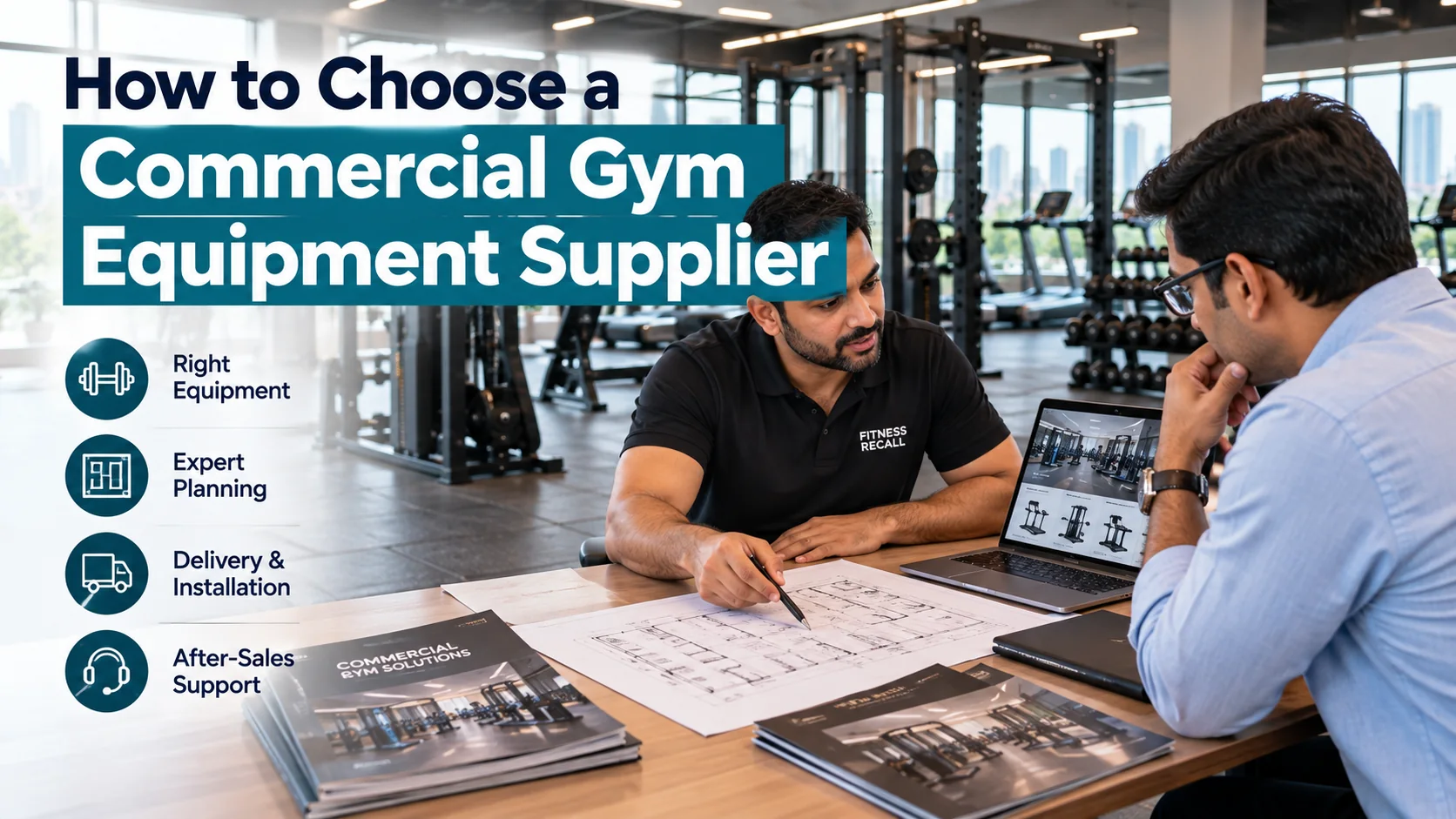
Choose a supplier that can understand the facility, plan the equipment mix and layout, explain the quotation, coordinate delivery and installation, and provide a clear after-sales process. Brand access alone is not enough.
Key Takeaways
- Begin with the facility, users and available floor area.
- Verify an authorised-dealer claim for the specific brand being offered.
- Compare equipment suitability and layout support, not only quotation value.
- Clarify delivery, installation and site-readiness responsibilities.
- Request applicable warranty documents and a clear after-sales contact process.
Choosing equipment is only one part of creating a commercial fitness facility. Choosing the company supplying it can be equally important.
A commercial supplier may be involved in product selection, equipment scheduling, layout discussions, delivery coordination, installation and post-installation communication. For that reason, comparing suppliers only on the bottom line of a quotation can leave important questions unanswered.
Here is a more practical way to evaluate potential suppliers.
How Do You Choose a Commercial Gym Equipment Supplier?
Choose a supplier that first understands the facility type, usable floor area, expected users and training requirement. Then assess whether the proposed equipment is appropriate, the brand relationship is clear, the layout can be planned, the quotation defines scope, and delivery, installation, documentation and after-sales enquiries have named responsibilities.
| Check | What to Ask |
|---|---|
| Equipment | Is the equipment appropriate for the intended commercial use? |
| Brand relationship | Is the supplier authorised for the brand being offered? |
| Layout | Can equipment be planned against the actual floor area? |
| Quotation | Are products, quantities and scope clearly identified? |
| Delivery | Who coordinates transportation and site access? |
| Installation | What is included and what must the site prepare? |
| After-sales | Who handles future service enquiries? |
Use the same project brief when comparing suppliers. This makes differences in equipment, scope and commercial terms easier to identify. Mumbai buyers can also use the commercial gym equipment checklist to prepare site and planning information.
What Should You Ask a Gym Equipment Supplier Before Buying?
Ask why each item suits the users and floor area, whether the supplier is authorised for the offered brand, what the quotation includes, how equipment will reach the gym floor, who installs it, what the site must prepare, which warranty documents apply and who receives future service enquiries.
Request answers in writing where they affect scope or cost. A clear proposal should identify products and quantities without relying on vague package descriptions. It should also separate equipment supply from any optional freight, unloading, installation, flooring, electrical work or other project services.
Start With Your Project, Not a Product Catalogue
Before approaching suppliers, prepare a short project brief.
Include the facility type, city, available area, target users, expected opening timeline and broad equipment requirements.
A useful supplier conversation should then focus on what is appropriate for that particular project.
For example, the requirements of a membership gym can differ considerably from those of a corporate fitness room, residential clubhouse or hotel.
Check the Supplier’s Brand Relationship
If a company claims to be an authorised dealer, ask which brands the authorisation covers.
This matters because terms such as “supplierâ€, “dealer†and “authorised dealer†should not automatically be treated as interchangeable.
Fitness Recall has confirmed authorised-dealer relationships for BH Fitness, Tunturi Fitness and California Fitness.
Buyers interested in individual ranges can review the BH Fitness product range, Tunturi Fitness products and California Fitness products.
For any brand, ask the supplier to clarify its commercial relationship when that distinction matters to your procurement process.
Look for Planning Support
A supplier should be able to discuss more than the number of machines you want.
Useful planning conversations include:
- usable floor area;
- expected users;
- equipment categories;
- circulation;
- training zones;
- equipment dimensions;
- site access;
- delivery sequence;
- installation readiness.
This becomes particularly valuable when the buyer has a fixed area but has not yet finalised the equipment schedule.
Ask How the Equipment List Is Developed
Be cautious about treating a generic package as automatically suitable for every facility.
A stronger process begins with the project brief and then develops an equipment mix around the intended use.
Ask why each major equipment category is being proposed.
Does the cardio selection suit the expected members? Is enough room being retained for free weights? Are too many similar machines consuming limited floor area? Is accessory storage being considered?
The answers reveal whether the quotation is based on planning or simply a standard sales list.
Assess Layout Capability
Commercial equipment needs to work as a complete floor, not as individual products viewed in isolation.
A layout discussion can help establish whether the proposed equipment actually fits the site.
Fitness Recall’s turnkey gym project service covers equipment planning alongside wider project support.
Even when you are purchasing equipment without a complete turnkey package, layout planning can still be valuable.
Examine the Quotation Carefully
A useful quotation should make it possible to understand what is being proposed.
Check product names and quantities and ask for clarification where anything is unclear.
Do not assume that services such as freight, unloading, installation or site preparation are automatically included. Confirm the commercial scope directly with the supplier.
Likewise, do not assume a particular warranty period. Ask for the applicable warranty information for the products under consideration.
Discuss Delivery Before Confirming the Order
Delivery deserves attention during procurement rather than immediately before dispatch.
The supplier should know enough about the site to plan appropriately.
Provide information about:
- delivery address;
- floor level;
- lift availability;
- doorway dimensions where relevant;
- loading access;
- site restrictions;
- preferred or permitted delivery hours.
This is especially important in dense urban environments such as Mumbai.
Buyers planning a facility in the city can also review Fitness Recall’s commercial gym equipment Mumbai service page.
Clarify Installation
Ask exactly how installation will be coordinated.
Some projects require equipment to arrive only after flooring, electrical work, mirrors or other interior activities have reached a suitable stage.
The supplier and project team should therefore communicate about site readiness before delivery.
For larger projects, installation planning can also help prevent unnecessary movement of equipment after it has been positioned.
Evaluate Communication
Commercial projects involve decisions, revisions and coordination.
Notice how clearly a potential supplier handles questions before the order.
Are product questions answered specifically? Are uncertain points checked rather than guessed? Are changes to the equipment list documented? Is responsibility for the next step clear?
Good project communication is difficult to measure in a specification sheet, but it can be important throughout procurement and installation.
Ask About After-Sales Support
Before purchasing, find out what happens if assistance is needed later.
Ask:
- whom you contact;
- what information is required;
- how service requests are recorded;
- what warranty documentation applies;
- which issues fall within or outside warranty coverage.
The answers may differ according to equipment and brand. Get applicable terms in writing where possible.
Review Relevant Project Experience Carefully
Past installations can help establish whether a supplier has experience with commercial environments, but case studies should be factual.
Fitness Recall’s supplied project references include BH Fitness equipment at Asmita Club in Mira Road, Mumbai, and MMA Matrix Gym locations in Jabalpur, Belgaum, Bangalore and Ghaziabad. Supplied Tunturi Fitness references include MMA Matrix Gym in Dombivli and Amritsar, as well as Antariksh Developers in Mumbai.
These references should not be interpreted as claims about project size, results or specific equipment models unless those facts are separately documented.
Compare Total Project Suitability
The cheapest individual machine is not necessarily the deciding factor in a commercial project.
Compare suppliers according to the complete requirement:
- suitability of the proposed equipment;
- planning support;
- brand relationship;
- clarity of documentation;
- delivery planning;
- installation support;
- communication;
- after-sales process.
The aim is to select a supplier capable of supporting the procurement process you actually require.
Frequently Asked Questions
How do I choose a commercial gym equipment supplier?
Prepare a consistent project brief and assess each supplier against equipment suitability, brand relationship, layout capability, quotation clarity, delivery, installation and after-sales procedure. The lowest quotation is not necessarily the most suitable if major responsibilities or product details are unclear. Ask for the applicable documentation before making a final comparison.
What should I ask before buying commercial gym equipment?
Ask which products suit the facility, why they have been selected, whether their dimensions fit the plan, what electrical or site preparation is required, and what delivery and installation include. Confirm warranty documentation, service contacts and any exclusions. Also provide accurate access information so logistics can be reviewed before dispatch.
Does a gym equipment supplier provide installation?
Installation scope varies by supplier and project. Do not assume it is included simply because equipment is being delivered. Ask whether assembly, positioning, levelling, testing and handover are included and what needs to be ready beforehand. Fitness Recall can support delivery and installation according to the agreed project scope.
Should a supplier help with gym layout planning?
Layout support is valuable because commercial equipment must work as a complete floor. A supplier should be able to test the proposed list against the room dimensions, operating footprints, training zones and circulation. Even when a full turnkey service is not required, layout planning can reveal overcrowding or missing categories before ordering.
What should a commercial gym equipment quotation include?
A useful quotation should clearly identify products, quantities and the agreed scope. It should state whether freight, unloading, installation or other services are included or separate. Buyers should request applicable warranty information and ask for clarification wherever product naming, responsibilities or exclusions are not clear.
Why is after-sales support important?
Commercial equipment remains in regular use after installation, so buyers need a clear way to report service requirements and supply relevant product information. Before ordering, confirm the service contact, issue-reporting process and applicable warranty documents. Avoid relying on assumed response times or warranty periods that have not been documented.
What should I ask a commercial gym equipment supplier?
Ask about equipment suitability, brand relationships, layout assistance, delivery, installation, warranty documentation and after-sales procedures. You should also provide information about your facility so the supplier can respond to the actual project rather than recommending a generic package.
Why does authorised-dealer status matter?
Authorised-dealer status establishes a formal commercial relationship with a brand. If this is important to your purchase, ask the supplier to confirm the relationship for the particular brand being discussed rather than assuming every product it sells carries the same status.
Should I get a gym layout before asking for a quotation?
It is not always necessary to have a finished layout, but accurate site dimensions are highly useful. A supplier can then help develop an equipment schedule and layout appropriate to the available space.
Should installation be included in a commercial equipment quotation?
The scope varies. Ask whether installation is included or separately quoted and what site preparation is required. It is better to establish these details before confirming an order.
How many suppliers should I compare?
There is no fixed number. The objective is to gather enough information to evaluate equipment suitability, commercial terms and project support. Comparing several poorly matched quotations can be less useful than obtaining detailed proposals based on the same project brief.
Can Fitness Recall assist with complete gym setup?
Fitness Recall provides equipment planning, supply, delivery, installation and turnkey gym project support. The scope can be discussed according to the property, facility type and project requirements.
Discuss Your Equipment Requirement
If you have a floor plan, approximate gym area or preliminary equipment list, Fitness Recall can review the requirement and discuss suitable next steps.
Contact Fitness Recall to start a commercial gym equipment enquiry.